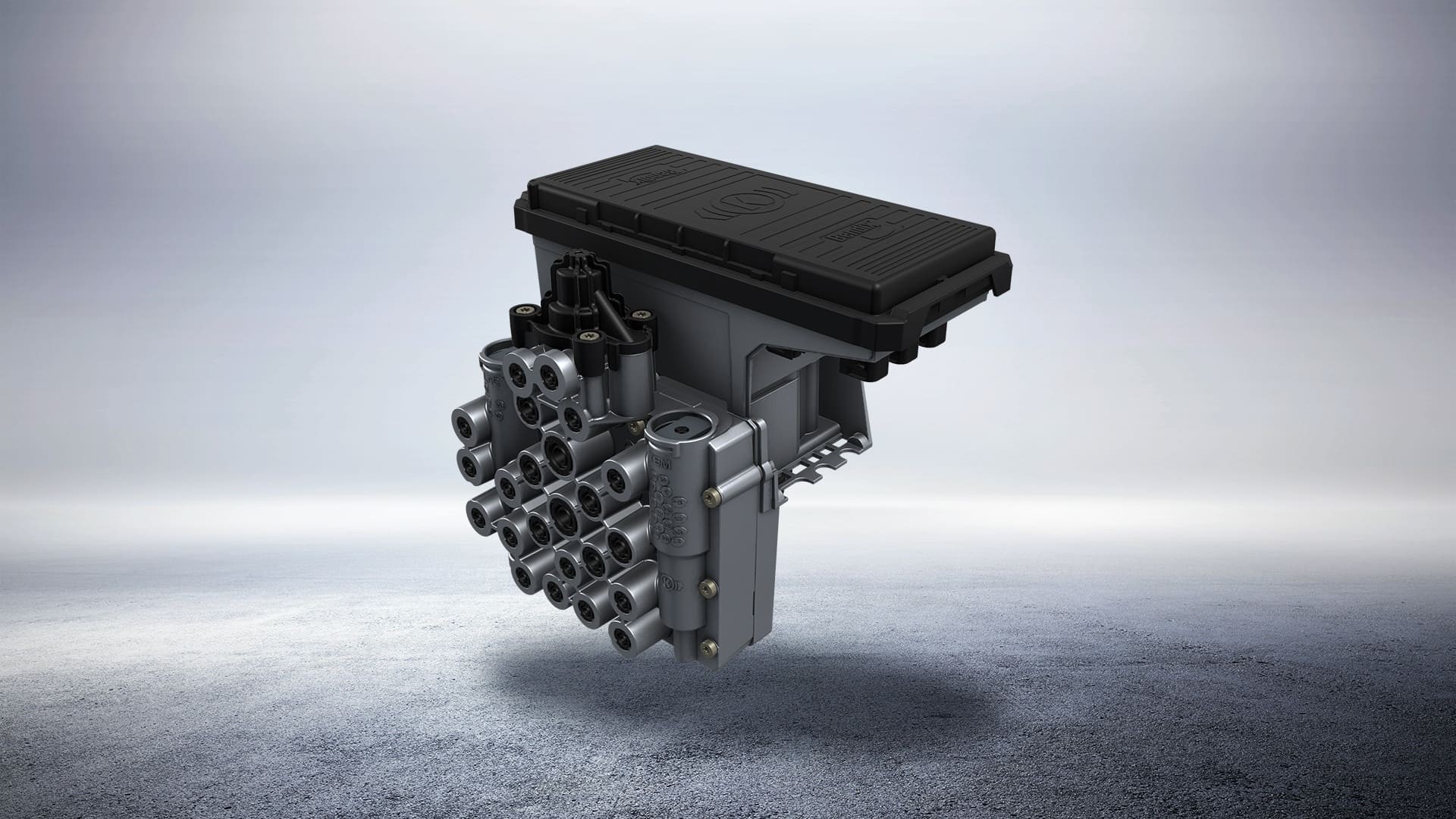
Electronic brake control actuates each wheel brake individually – precisely, without delay. This creates the technical foundation for vehicle dynamics control, driver assistance systems and highly automated driving.
Contact
Knorr-Bremse Systeme für Nutzfahrzeuge GmbH
80809 München
Deutschland - Germany
info@knorr-bremse.com
What is an electronic braking system (EBS)?
An electronic braking system (EBS) is an electronically controlled brake system for trucks, coaches and trailers that regulates braking operations precisely and according to the situation. Compared with conventional systems, EBS enables shorter stopping distances, more stable driving behaviour and optimized coordination between towing vehicle and trailer. At the same time, it forms the basis for modern driver assistance systems up to automated driving.
By 2025, Knorr-Bremse had delivered more than 15 million ABS/EBS systems worldwide.
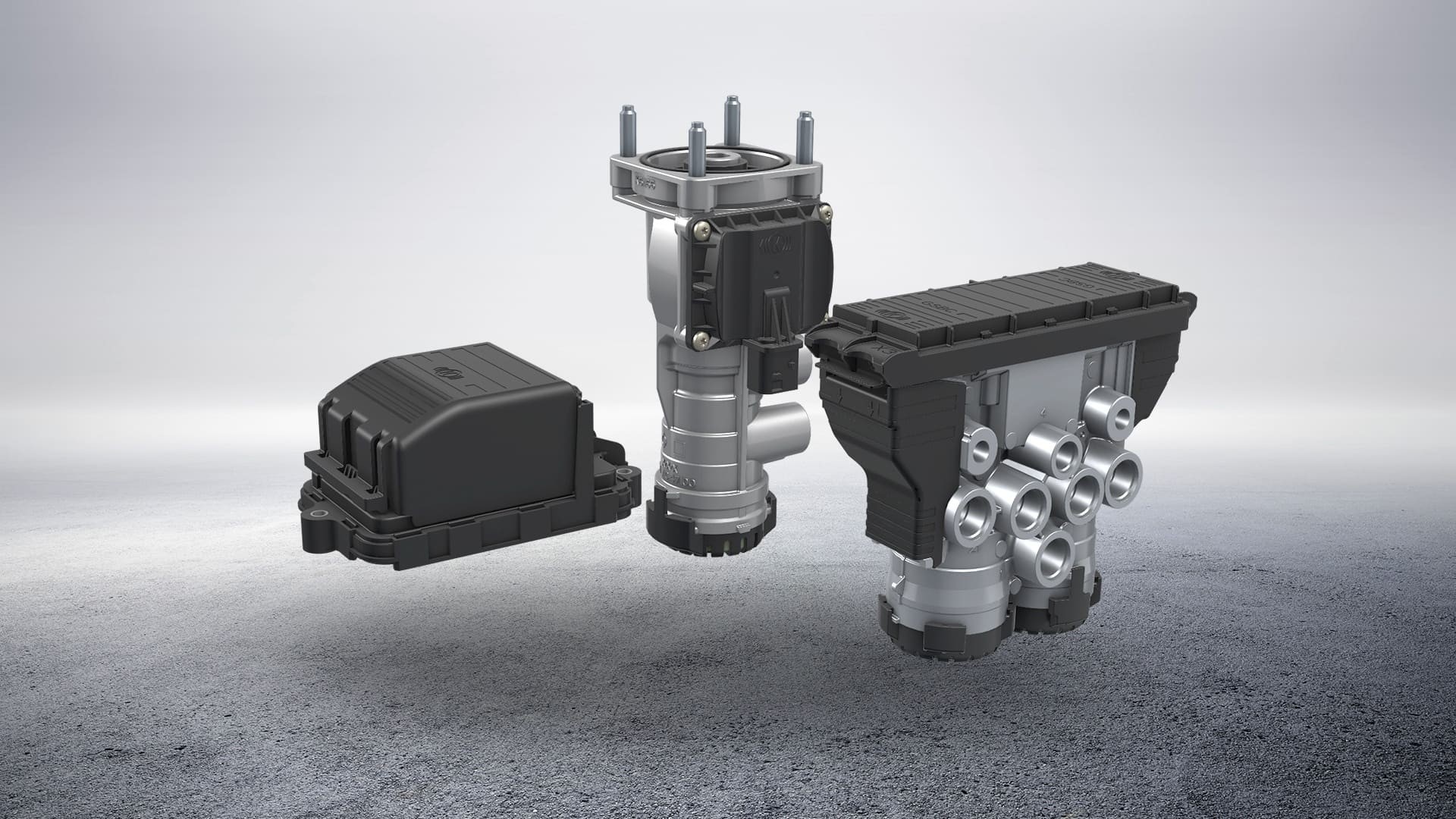
In recent decades, vehicle manufacturers have relied on technically different systems for brake control. In some markets, purely pneumatic systems are still in use today, while the more powerful electronic braking system continues to gain ground worldwide. The reasons for this are differing legal requirements and varying customer profiles. ABS and EBS systems are now standard equipment on trucks and buses. In 2022, the number of ABS/EBS systems delivered worldwide by Knorr-Bremse passed the 13 million mark. With Knorr-Bremse's GSBC (Global Scalable Brake Control) approach, complexity is reduced and modular as well as scalable brake control systems are enabled.
Anti-lock Braking System (ABS)
ABS extends the pneumatic brake system with electronic intervention. The braking action is still transmitted pneumatically – in addition, ABS monitors the wheel speeds and prevents locking and uncontrolled skidding.
Further functions can be implemented on the same basis: for example, anti-slip regulation (ASR), electronic stability program (ESP) and hill start aid.
Benefits of ABS
- Simple control principle
- Shorter stopping distances
- Safe vehicle handling
Electronic Braking System (EBS)
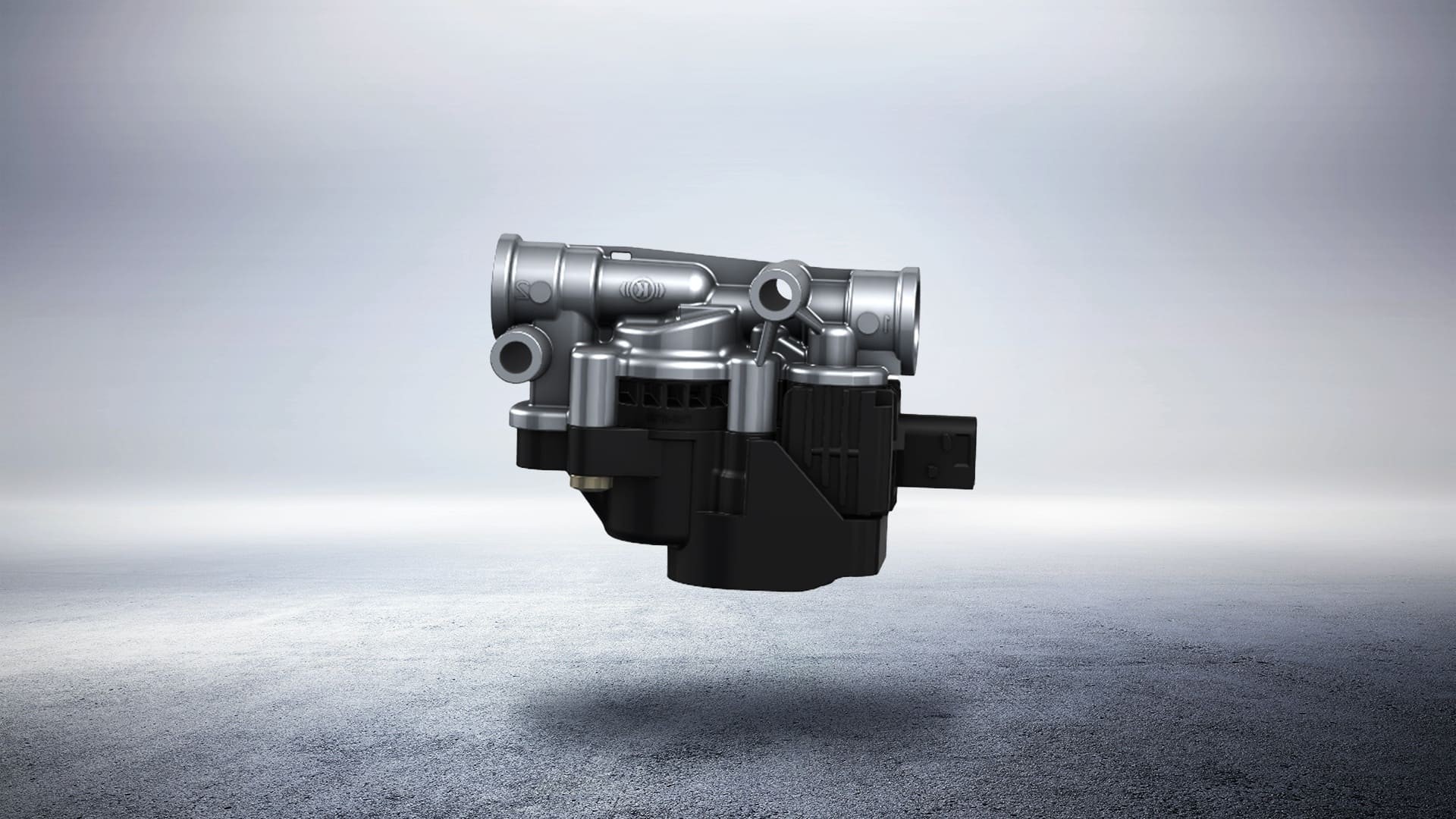
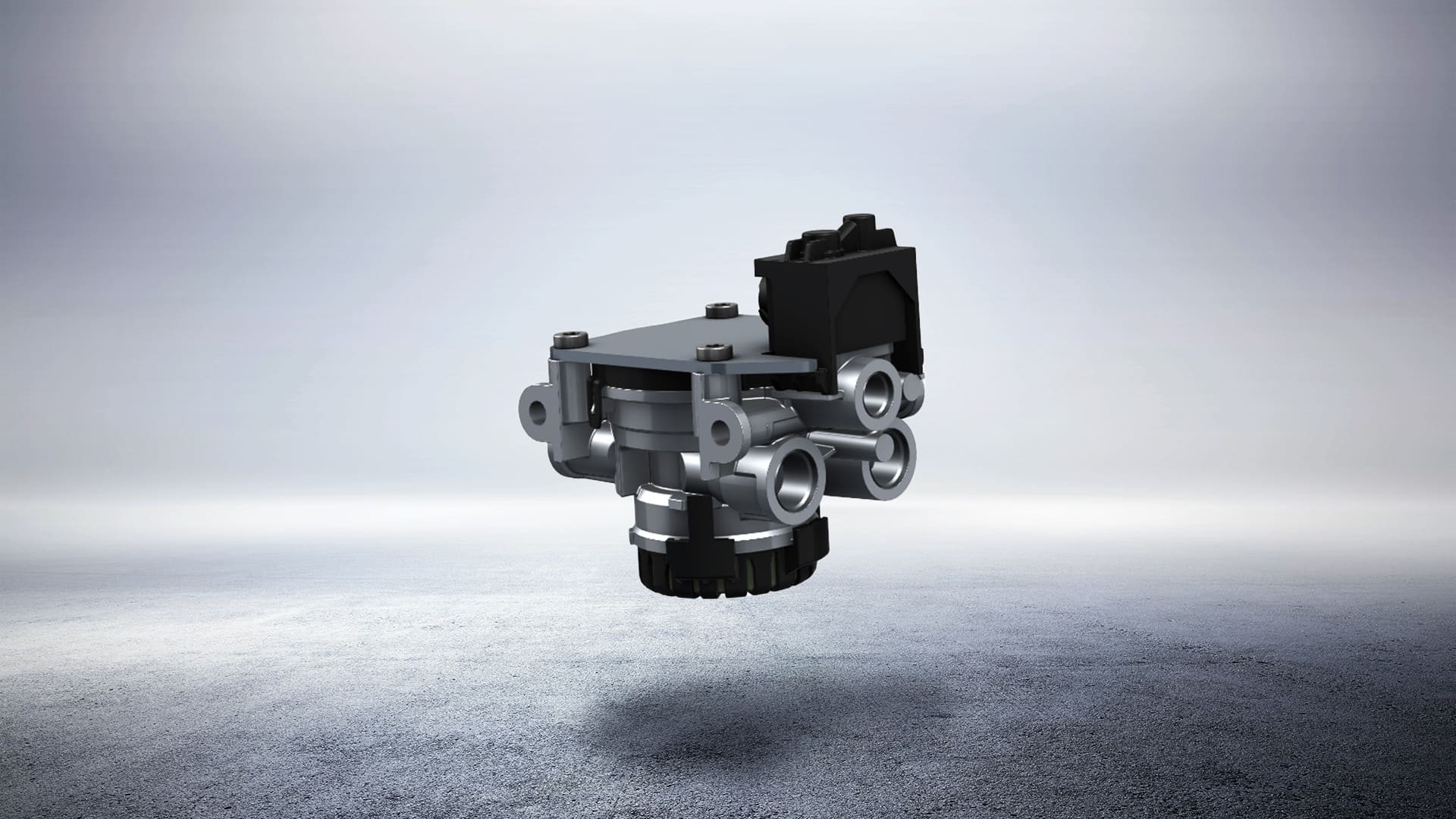
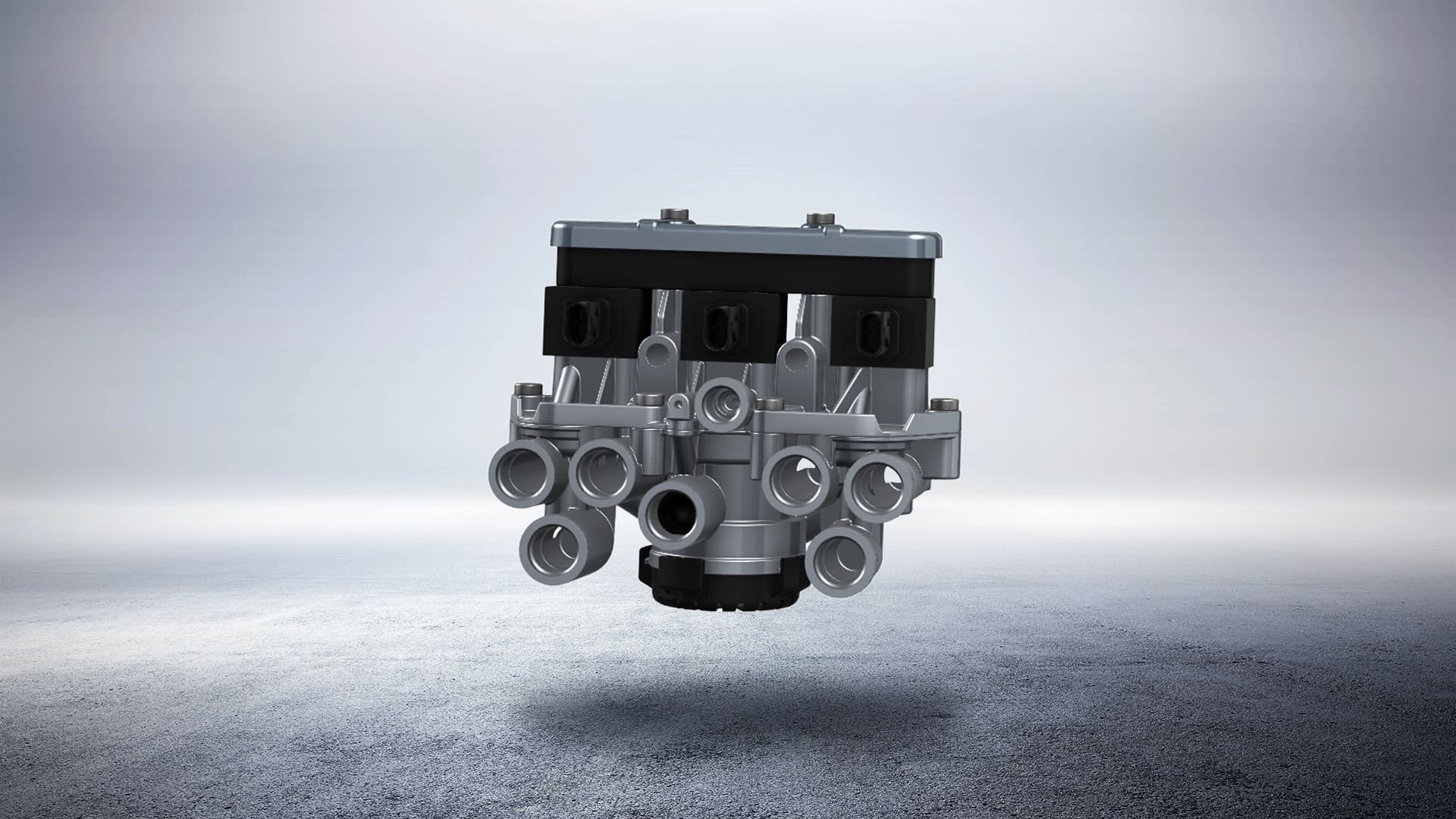
EBS – also known as brake-by-wire – controls the braking operation entirely electronically. A pedal travel sensor registers the braking demand; from this, the control unit calculates the optimal brake pressure for each axle, depending on speed, load and wheel speed. The setpoint values are transmitted via its own brake system CAN bus to the electro-pneumatic modulators (EPM), which regulate the pressure precisely.
This brake-by-wire principle is the basis for driver assistance systems and automated driving.
Benefits of EBS:
- Axle-individual pressure control: optimal, load-dependent braking force with a constant pedal feel
- Harmonious distribution of the deceleration demand across the continuous and service brakes (brake blending)
- Automatic coordination of towing vehicle and trailer (coupling force control)
- Technical prerequisite for automating the braking operation via driver assistance systems
- Adjustment of brake force distribution to harmonise lining wear across all axles (lining wear control)

Global Scalable Brake Control (GSBC)
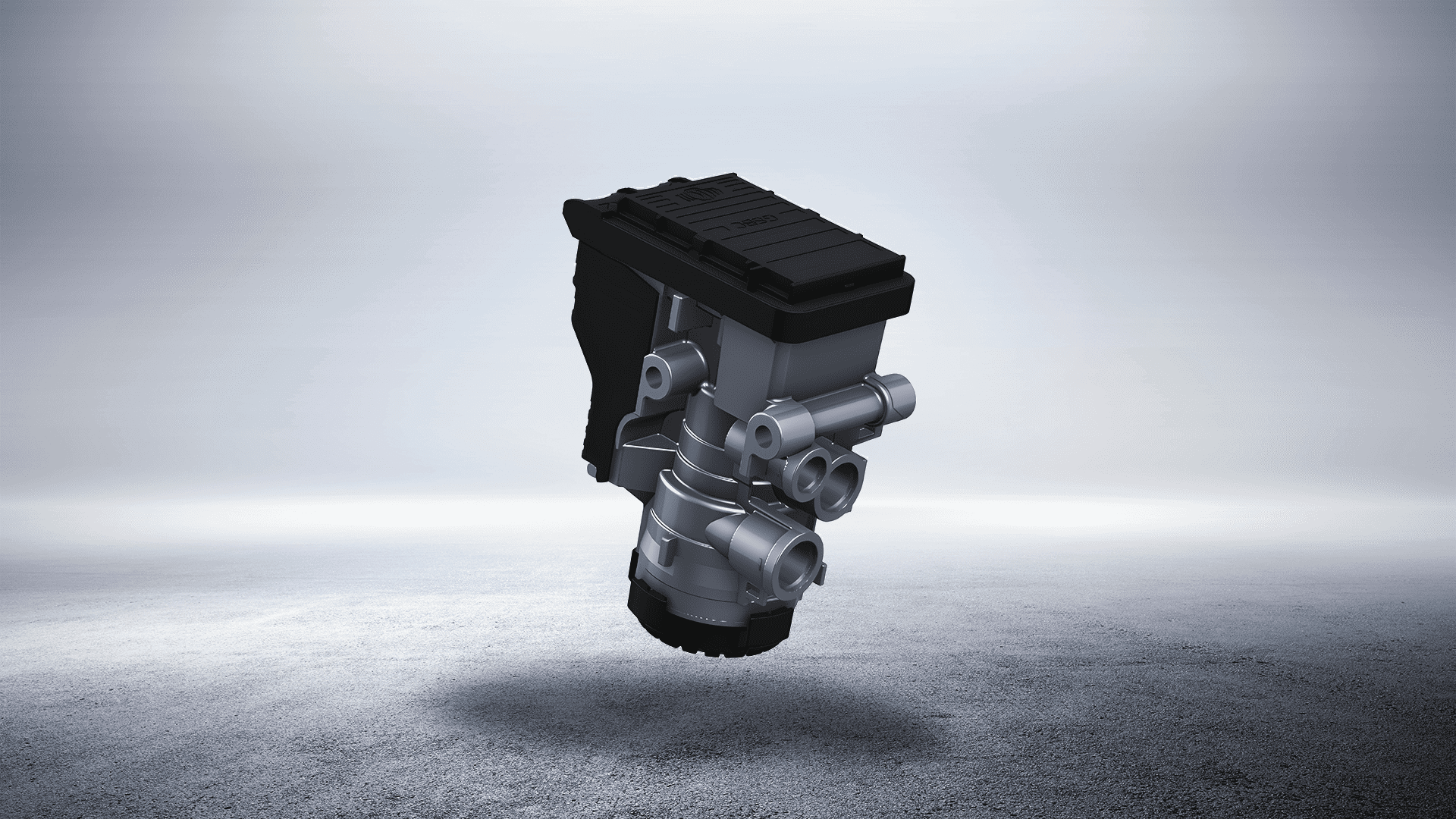
As the latest EBS generation, GSBC offers a modular brake control platform for global use in a wide variety of configurations. This reduces complexity, saves installation space and lowers costs – and gives OEMs a future-proof basis for driver assistance, e-mobility and highly automated driving. The GSBC system integrates the latest cyber-security functions.
Fewer parts, more functions
Through standardised components and a modular design, GSBC enables cost-optimised system layouts. Mounting and connection positions are largely identical for ABS and EBS configurations – as is cable and line routing. For OEMs, this means significantly less effort when switching between ABS and EBS.
Modular software
The GSBC software covers ABS, traction control and ESP, as well as the interaction of service and continuous brakes (brake blending) with retarders, exhaust flaps and electric motors. Additional functions such as hill start aid or automatic brake activation when a door is open can be added modularly.
rGSBC: System architectures for highly automated driving with rGSBC
For SAE Level 4, Knorr-Bremse develops redundant brake system architectures that remain fully functional even in the event of a fault. The offering ranges from the minimal-risk manoeuvre (safe stopping in the event of a fault) to the mission-complete solution (safe continued driving in the event of a fault) – realised through several fallback levels.
The redundant GSBC (rGSBC), a further development of GSBC, increases vehicle availability in particular through its redundant design, thereby contributing to the safe and economical operation of SAE Level 4 commercial vehicles. Through modular expansion and modification of existing components, it enables driving at SAE Level 4.
Benefits of GSBC:
Standardised platform for all brake control functions worldwide
Merging of the ABS and EBS system worlds
Significantly saves installation space and assembly effort
Scalable system configurations, up to redundancy for highly automated driving
New specific functions for optimal support of e-mobility – including recuperation and integration of electric motors into the control loop for vehicle dynamics
Cyber-security from production through to operation
ISO 26262-compliant development for functional safety
Next-generation Trailer EBS: iTEBS X
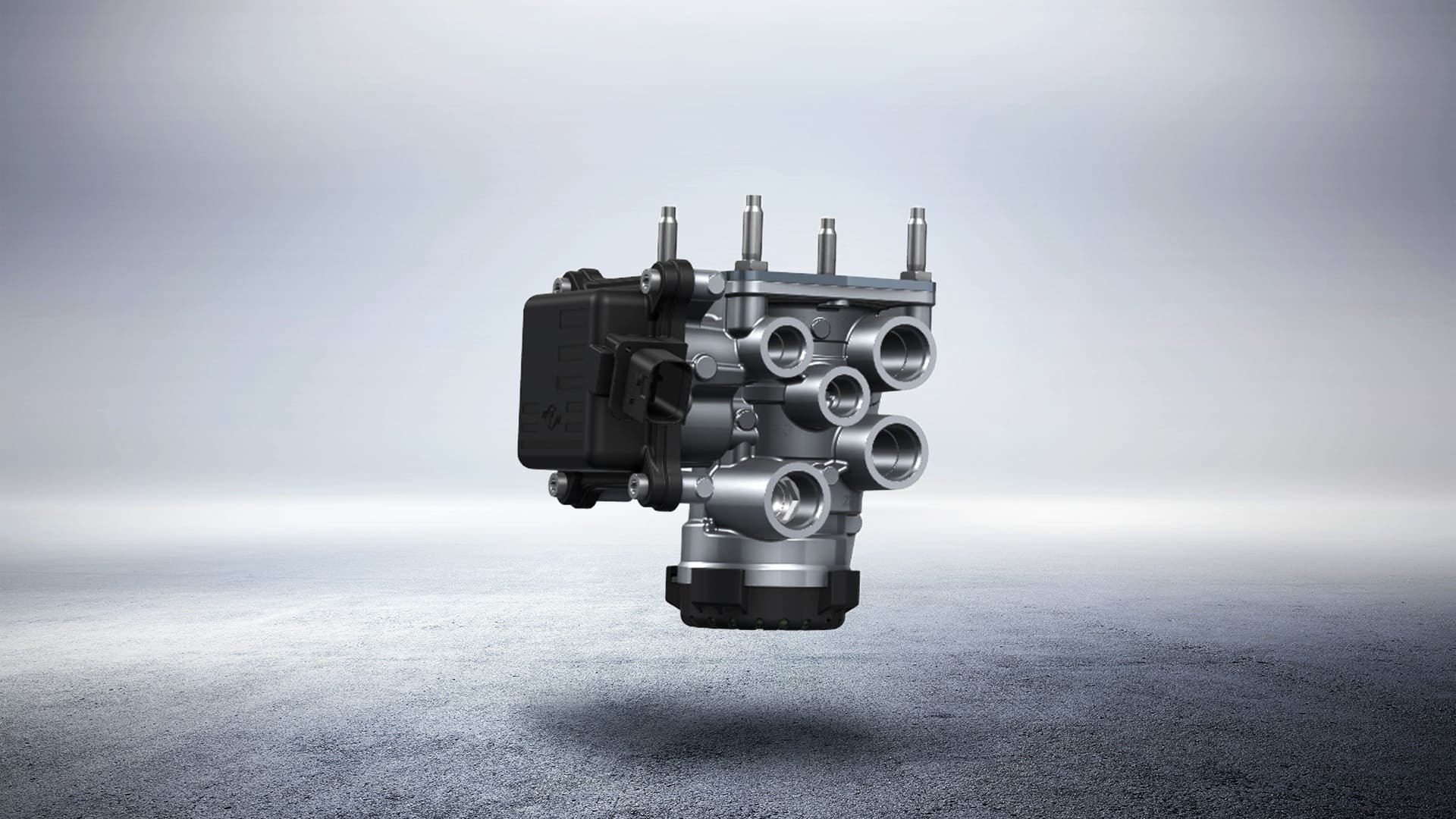
The iTEBS X combines the control unit, sensor system and pneumatic brake actuation in one compact assembly. ABS functions and load-dependent braking are managed entirely electronically within the module.
The various variants cover different requirements – particularly the LAC variant with integrated lift axle actuation. A new connector concept ensures maximum flexibility in trailer wiring.
Benefits of iTEBS:
- Cost-efficient modular design
- Variant with integrated lift axle functionality
- Standardised trailer layout and harmonised piping
- Additional supply connection and integrated overflow valve
- Easy installation thanks to unchanged mounting points across all product generations
- Flexible and modular HDSCS connector concept
- Compatible with all types of towing vehicles
- Roll stability program (RSP) integrated
- Emergency brake assist integrated